Floating plastic recovery · Central Visayas, Philippines
From sachets
to fuel
We recover the plastic nobody buys. A modular recovery plant on a moored barge, taken to island communities where the waste arises.
Hoppsann Technology AS · Norway · First region: Bohol
The problem
Why island plastic stays where it is
Part of the system already works. The part that does not is the part that pays too little to gather.
Already collected today
Clear PET and clean HDPE
These have buyers. Junk shops purchase them at a price that works. This part of the chain functions, and we are not trying to replace it.
Rarely collected today
Sachets, multilayer film, contaminated plastic
These have little or no material value on the island. Where they are collected, it is mostly as fuel for cement kilns: burned rather than recovered.
The mechanism is a price, not a preference. Hauling low-value plastic to a mainland plant often costs more than the plastic is worth. A facility moored where the waste arises changes that arithmetic.
Phases of the project
From collection to fuel
The chain starts with people who already collect plastic today, and ends with a product someone will pay for.
-
Phase 1
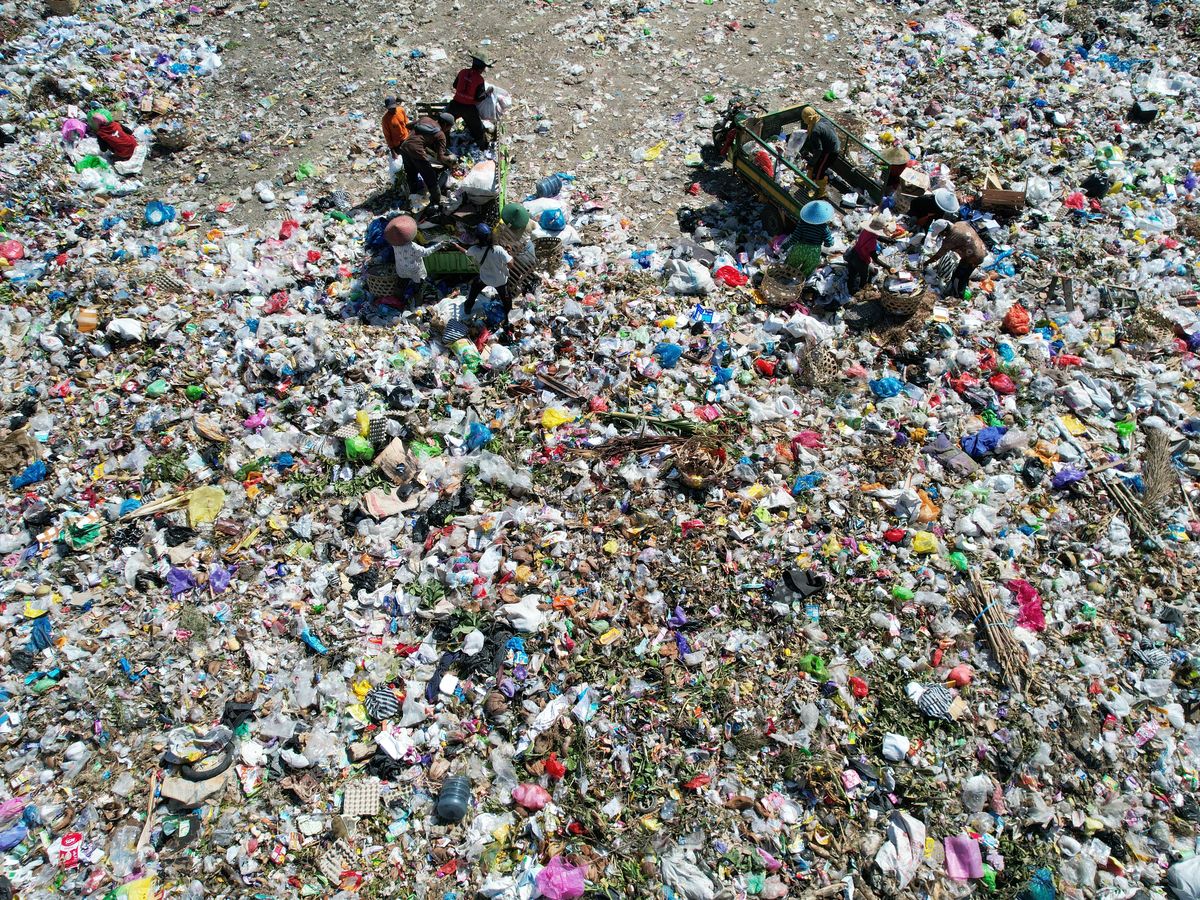
Collected and sorted on shore
Collectors gather plastic and bring it to the municipal materials recovery facility, which sorts it and bales it.
-
Phase 2
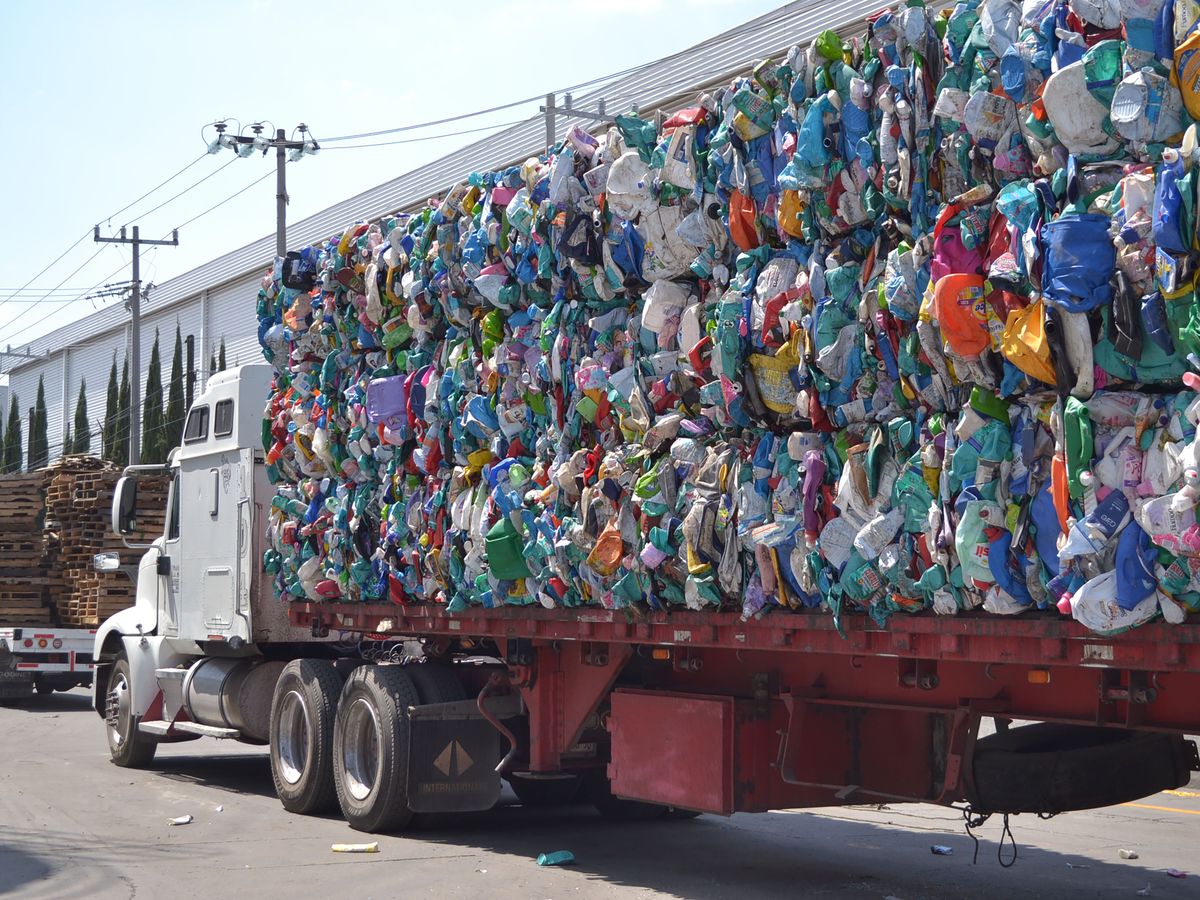
Delivered to the barge
Baled plastic is trucked from the materials recovery facility to the barge in the harbour. Hoppsann buys it as a paying customer.
-
Phase 3
Received on the barge
The barge is moored in the harbour close to the facilities that supply it. Bales are driven aboard and the processing line starts.
-
Phase 4
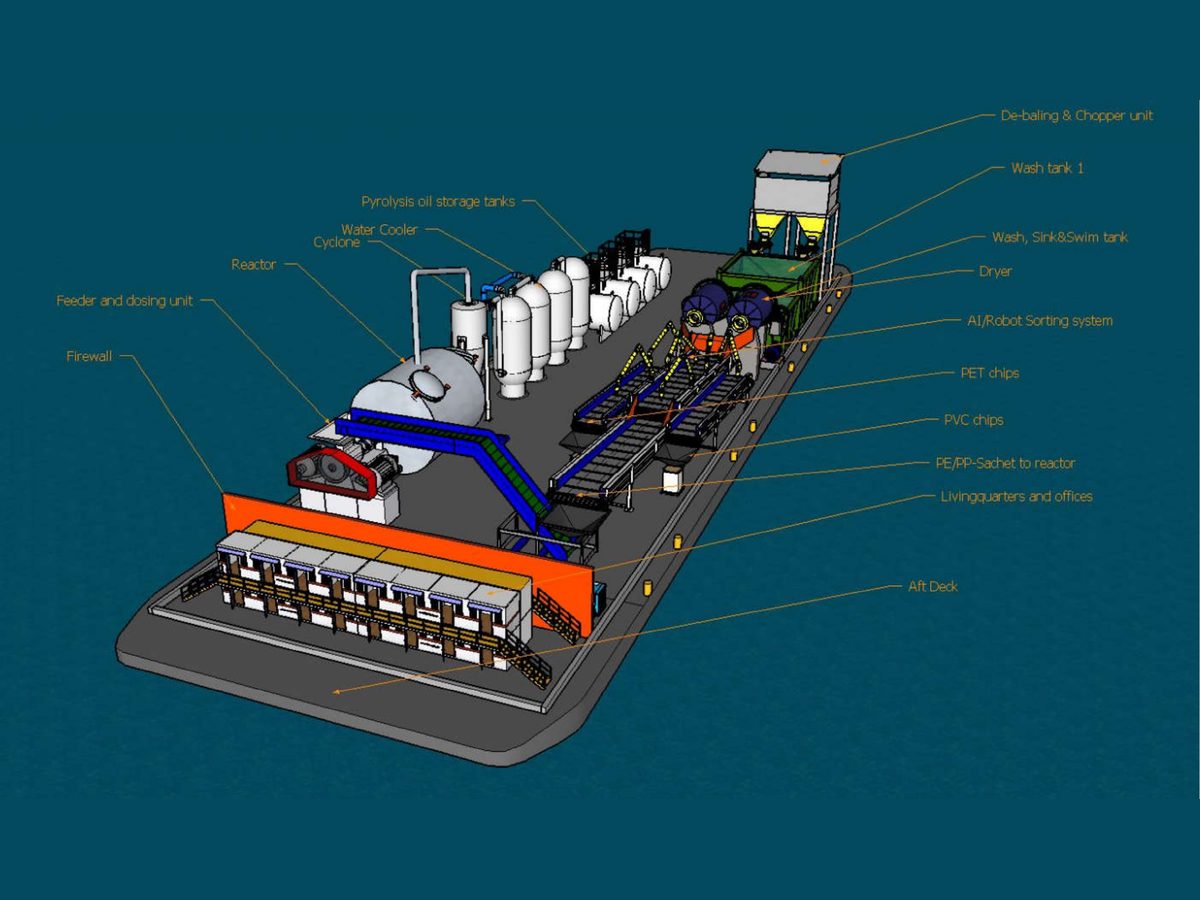
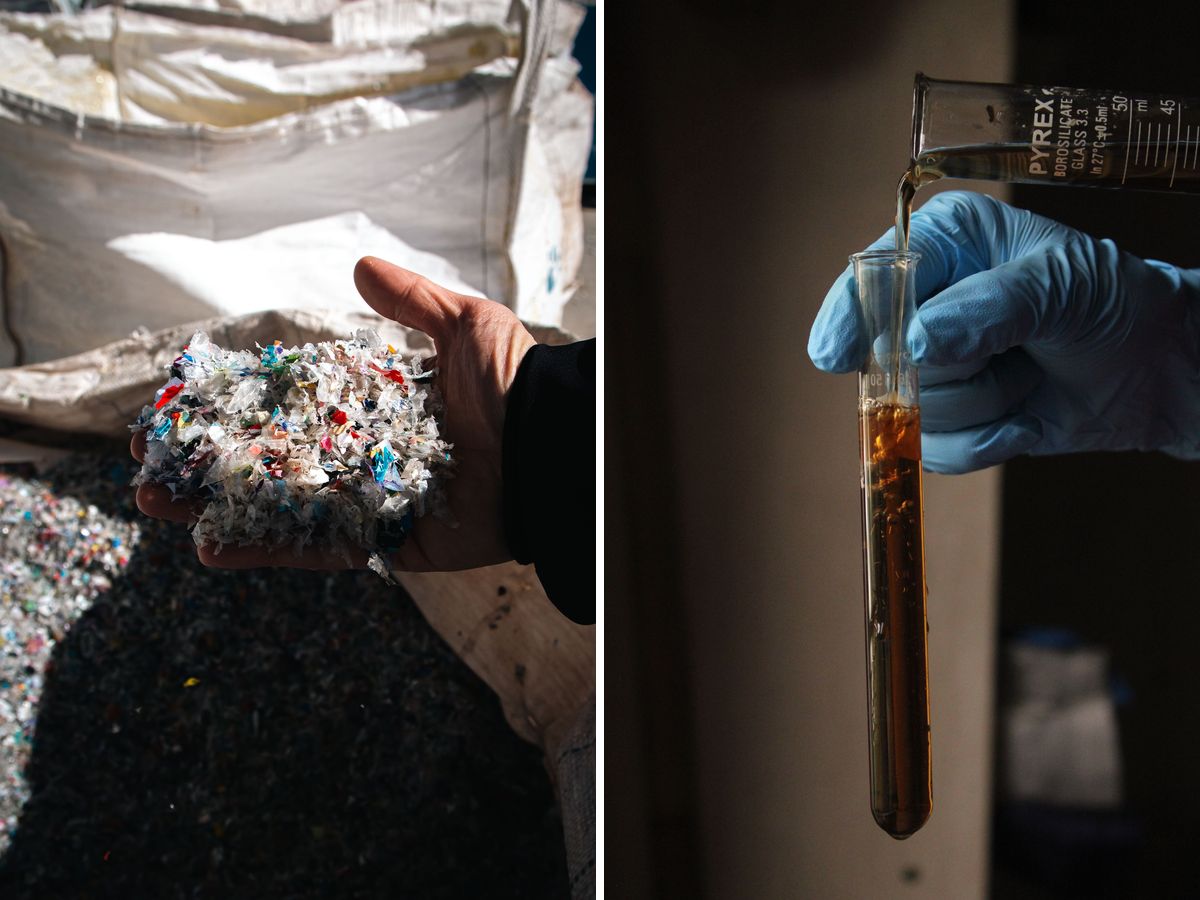
Processed on board
The plastic is washed, chopped, dried and sorted. The sachet and film fraction is fed through the pyrolysis reactor and becomes oil.
-
Phase 5
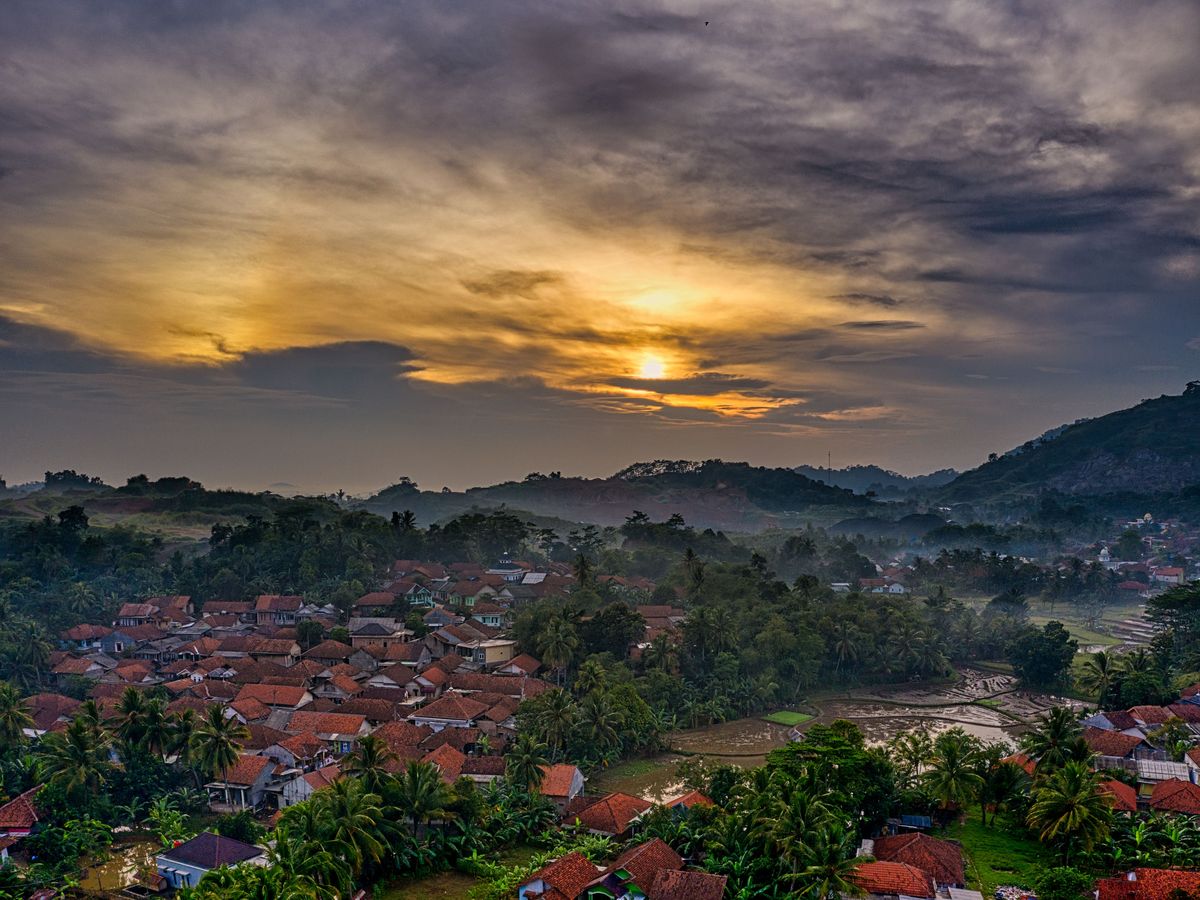
Less plastic left behind
The fraction nobody bought before now has a buyer, and the payment stays in the local economy.
What we are building
Plastic recovery on a moored barge
A modular plastic recovery plant mounted on a moored barge, buying sorted plastic from municipal facilities as a paying customer.
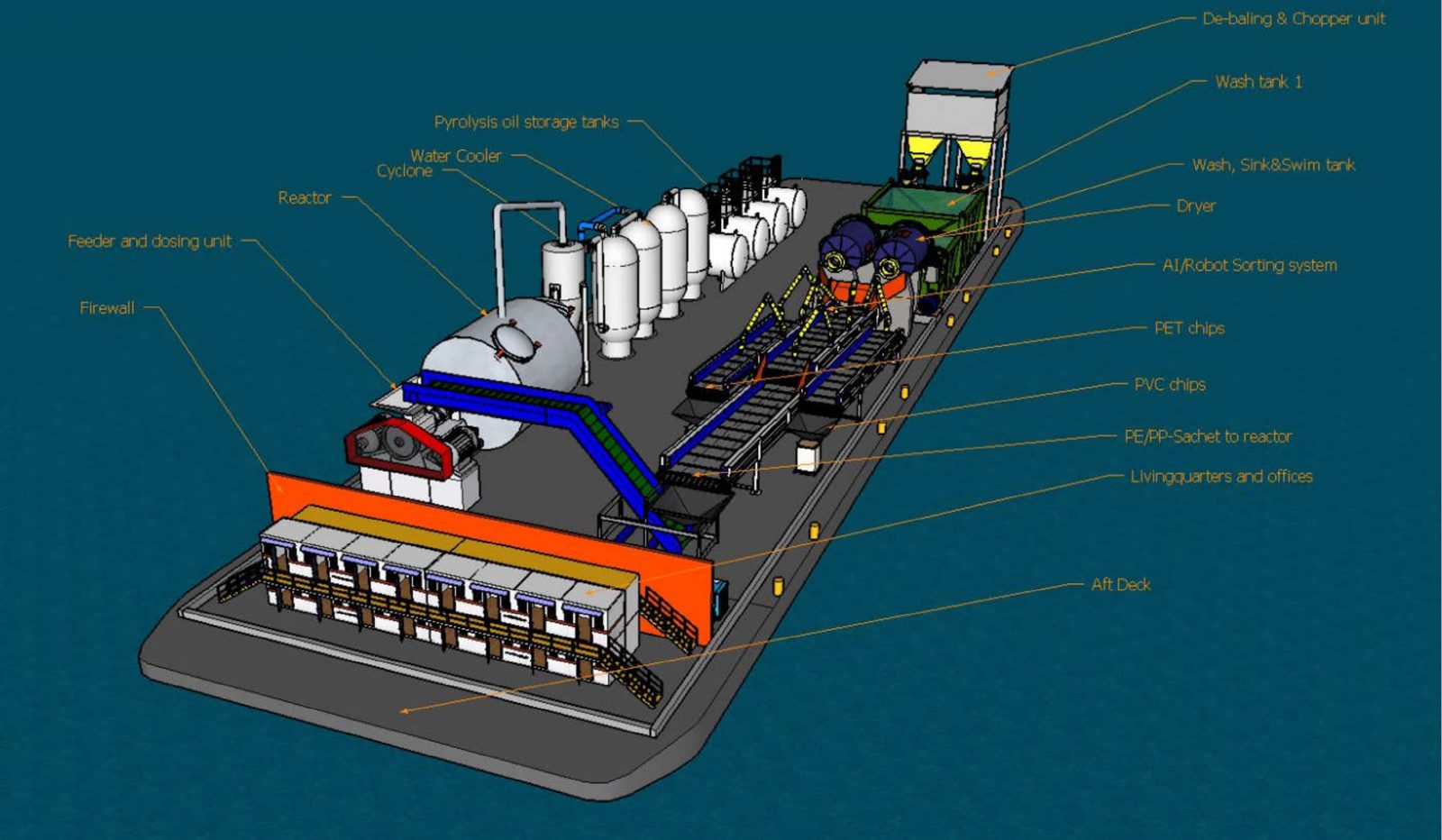
We bring the plant to the feedstock
Island collection is dispersed. Instead of hauling mixed plastic across water to a plant on shore, the plant is moored where the feedstock already is. When the local stream is exhausted, the barge is towed to the next location.
It buys, it does not collect
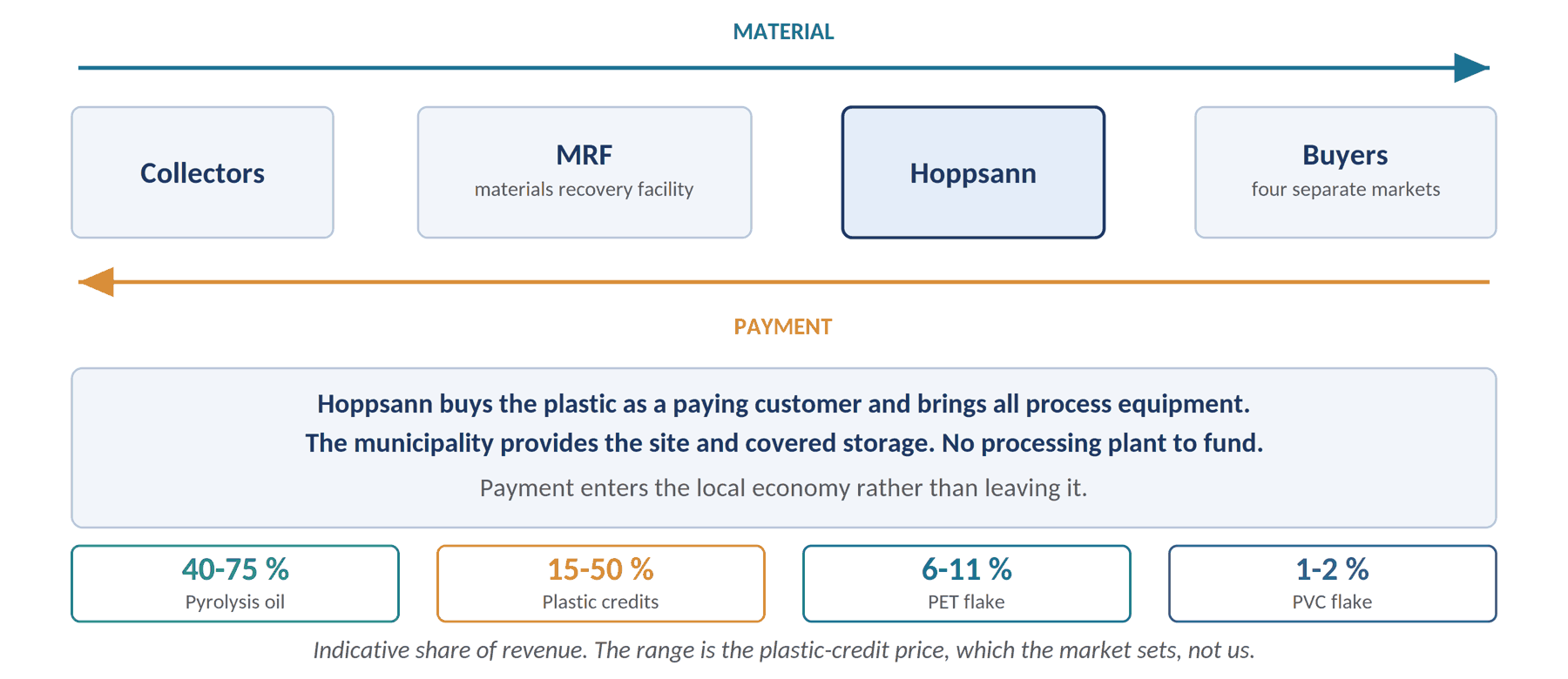
No collection routes, and no competition with barangay collection. We buy sorted and baled material from the materials recovery facility, as a paying customer.
It is not incineration
Closed thermal processing in the absence of oxygen, with no open flame touching the material. Distinct from incineration as prohibited under RA 8749.
Plant design figures
- Plastic intake, normal operation
- 30 t/day
- To reactor, normal operation
- 16.6 t/day
- Plastic intake, maximum
- 50 t/day
- To reactor, maximum
- 30 t/day
- Platform
- Moored barge, ~120 m
- Construction
- Relocatable modules
- Operation
- Operated locally
- Monitoring
- 24/7 from Norway
How the material moves
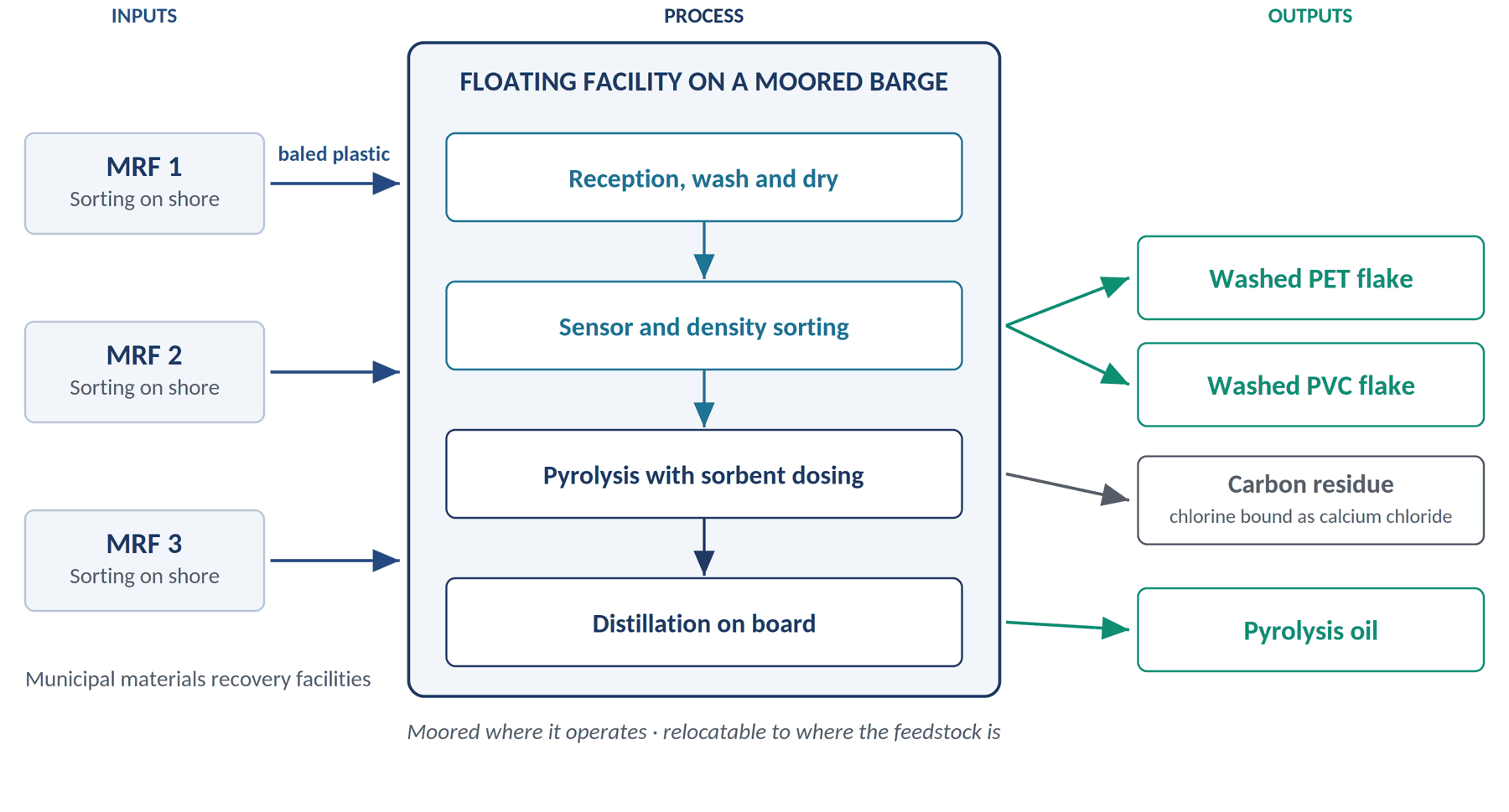
Baled at the facility, processed on board
The materials recovery facility sorts and bales. Everything after that happens on the barge, and the line splits into three streams once the plastic is clean and dry enough to identify.
Main product
PE / PP → pyrolysis → fuel oil
Sachets and multilayer film. This is the fraction the project exists for.
By-product
PET → recyclable chips
Clear and coloured, washed and sorted.
By-product
PVC → recyclable chips
Kept out of the reactor and sold on.
Which way the money flows
Four buyers in four separate markets. Three buy a physical product. The fourth buys a verified plastic credit, paid for by consumer-goods companies meeting their own obligations under RA 11898, not from public funds.
Technology
Proven parts, a new arrangement
Every step in the chain is established industry practice. None of it waits on a technical breakthrough.
Optical sorting
AI-driven near-infrared cameras and delta robots for PE, PP, PET and PVC.
Washing and drying
Established wherever film and flexible plastic is recycled today.
Pyrolysis
Operating commercially at industrial scale in Europe and in Asia.
Distillation
Ordinary refinery practice, applied at small scale on board.
What is new is the arrangement
The units are mounted as relocatable modules on a moored barge, and the plant is taken to the feedstock rather than the feedstock to the plant. The engineering risk sits in the integration, not in the individual steps.
The plant is monitored remotely from Norway around the clock, with local operators on board for daily running. Remote condition monitoring is ordinary marine practice.
Where the project stands
We start by measuring
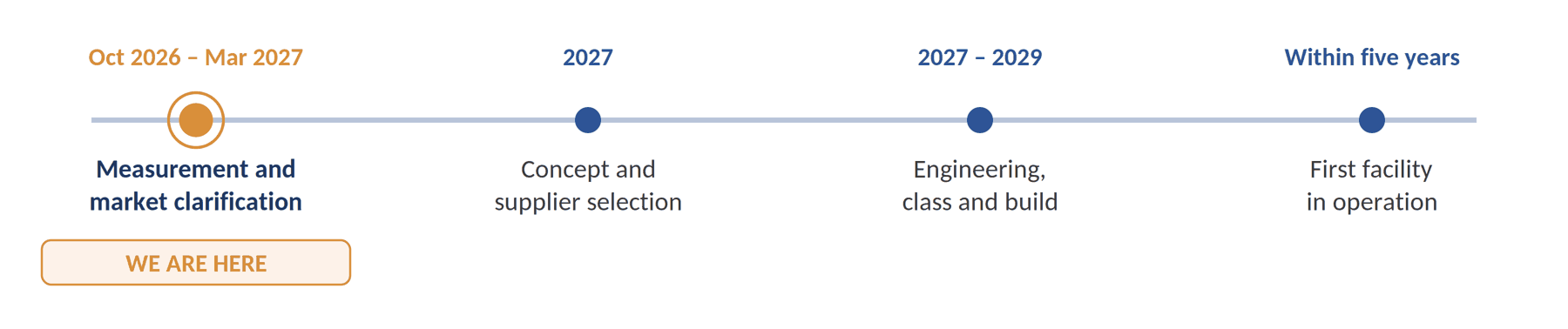
No waste characterisation data exists for these municipalities. That absence is itself the finding, and it is why the project begins with a measurement programme. Everything after it is conditional on what it finds.
Feedstock composition
Samples to an ISO 17025 accredited laboratory: chlorine, ash, moisture and calorific value.
Collector productivity
Measured at landfill, at barangay collection points and in dispersed picking.
Gate price paid today
What materials recovery facilities receive now, and what share reaches the collector.
Existing claims on the material
Whether any aggregator already claims recovery credit on the same tonnage.
Record-keeping
Whether facilities can produce per-delivery records today, or whether that must be installed.
Where we are looking first
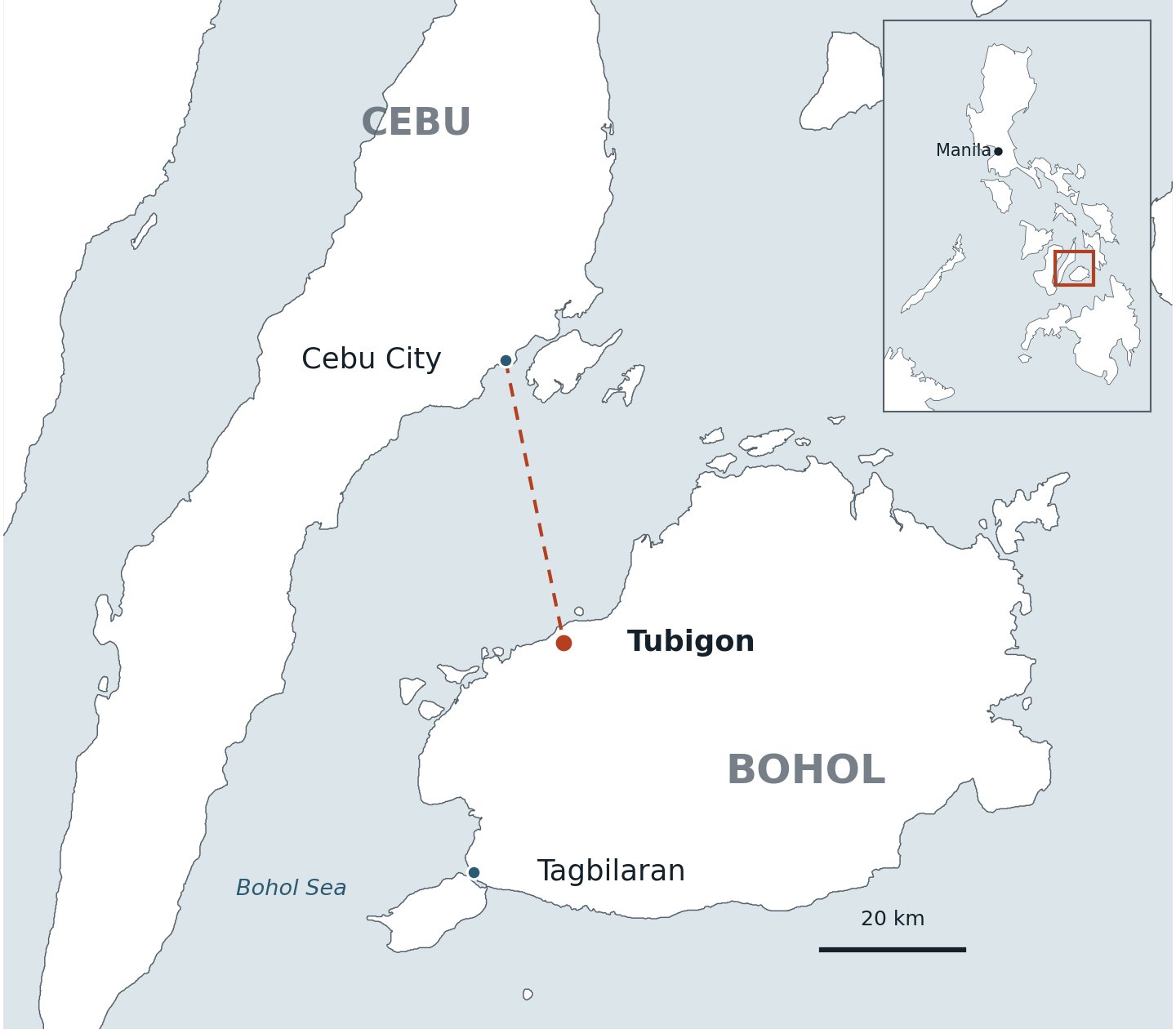
Central Visayas is the target region. Bohol has no plastic reprocessing capacity of its own, and Tubigon is the leading candidate for a first site. Nothing is agreed, and other municipalities are under evaluation.
Who we would like to meet
Let's talk
Local governments and recovery facilities
We want to understand what you collect, what you are paid for it today, and what happens to the fraction nobody buys. Where that material has no buyer, we would be buying it, not asking you to fund a facility.
Brands with obligations under RA 11898
Particularly those whose products reach consumers as sachets and flexible packaging. That fraction is our main feedstock, not an afterthought.
Investors and development finance
The measurement phase runs to early 2027, and investment conversations follow it. We would value meeting investors active in this sector.
Contact
Tor M. Stolpestad, CEO
Phone and WhatsApp
+47 989 03 320Company
Hoppsann Technology AS
Norway